Imperial vs. Metric System: A Practical Guide for DIYers
Published: April 22, 2026
If you've ever bought furniture from IKEA or tried to follow a woodworking plan found online, you've likely crashed headfirst into the great measurement divide: Imperial versus Metric. While almost the entire world uses the metric system, the United States (along with Liberia and Myanmar) stubbornly clings to the Imperial system.
For DIYers, builders, and makers, this duality can be incredibly frustrating. Trying to find a 13mm wrench when you only own a set of standard American wrenches is a rite of passage. In this guide, we'll break down the differences, explain why we still use both, and teach you how to survive the conversion process.
The Imperial System (Customary Units)
The Imperial system, technically known in the US as "United States Customary Units," is based on historical, physical references. Legend has it that an inch was originally defined as the width of a man's thumb, and a foot was, unsurprisingly, the length of a king's foot.
The defining characteristic of the Imperial system is that it relies on fractions.
- 12 inches in a foot
- 3 feet in a yard
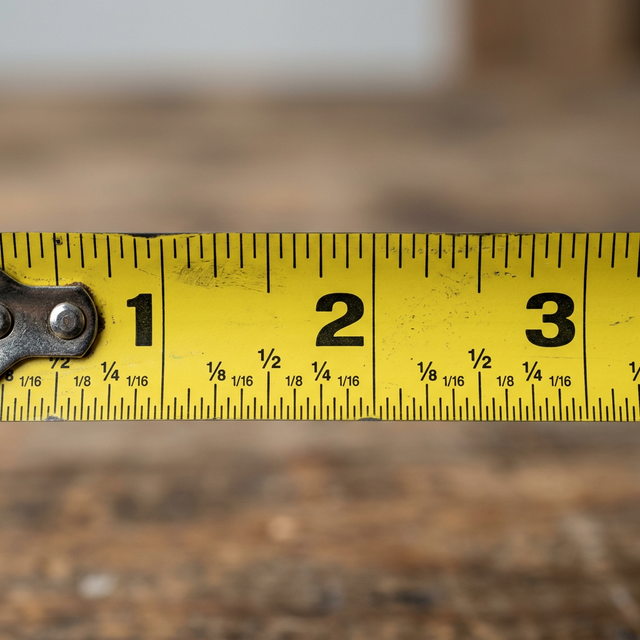
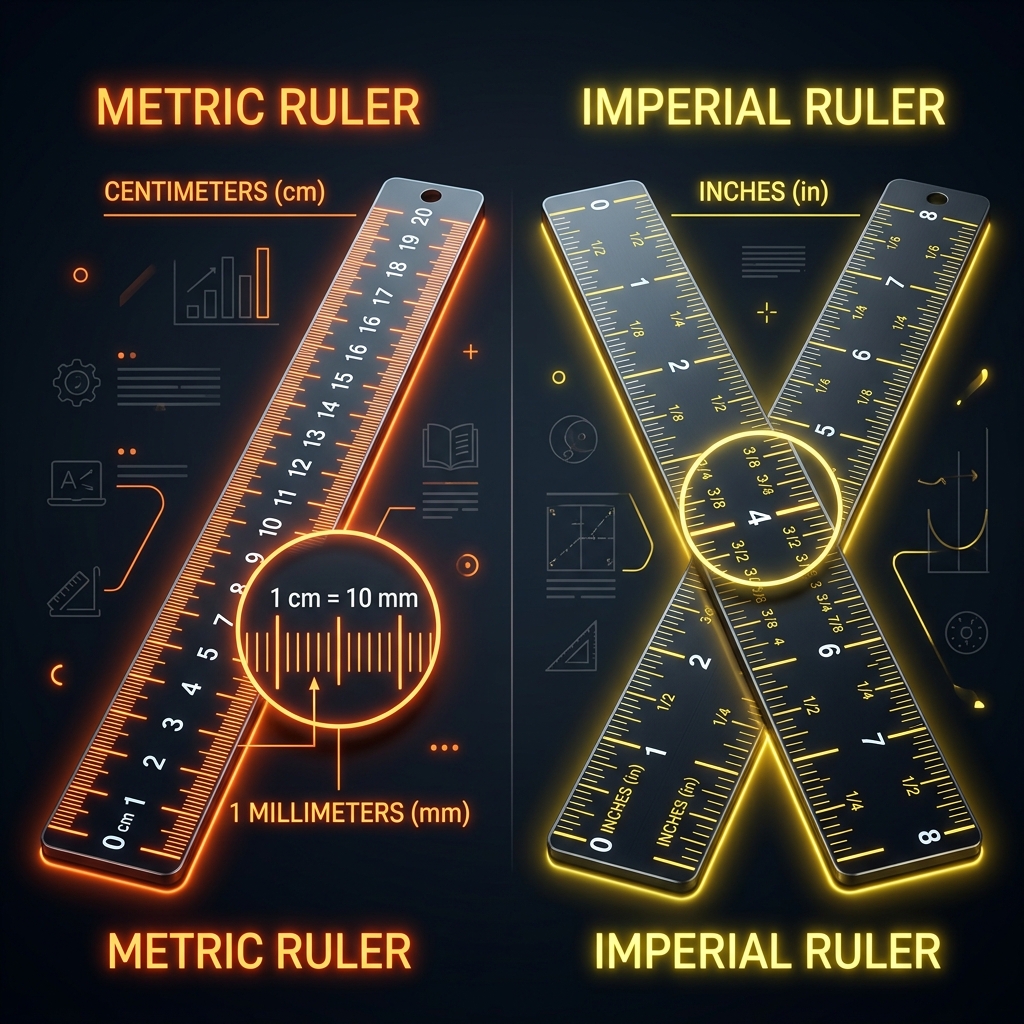
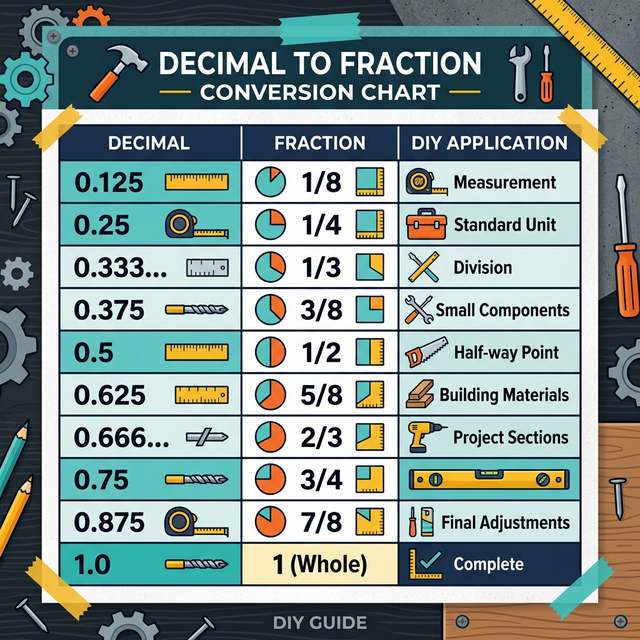
- Inches are divided into halves (1/2), quarters (1/4), eighths (1/8), and sixteenths (1/16).
While the math can be cumbersome (quick, what's 3/16 + 5/8?), many carpenters argue that the Imperial system is superior for building houses because the number 12 is highly divisible. You can easily divide a foot by 2, 3, 4, or 6 and get a whole number of inches. Try dividing 100 centimeters by 3!
The Metric System (SI Units)
The Metric system, officially the International System of Units (SI), was developed during the French Revolution. Its goal was to create a rational system based on the natural world rather than royal appendages. It is a base-10 system, meaning everything scales by multiples of ten.
- 10 millimeters (mm) in a centimeter (cm)
- 100 centimeters in a meter (m)
- 1000 meters in a kilometer (km)
The beauty of the metric system is its mathematical simplicity. To convert from millimeters to meters, you simply move the decimal point. There are no complicated fractions to memorize or convert.
Did you know? Even the US Customary System is now officially defined in terms of metric units. Since 1959, an inch has been legally and precisely defined as exactly 25.4 millimeters.
Practical Conversions You Need to Know
If you work on cars, build furniture, or do home repairs, you must be bilingual in measurements. Here are the absolute most important conversions to memorize (or bookmark):
| Imperial Unit | Metric Equivalent | Mental Math Shortcut |
|---|---|---|
| 1 Inch | 25.4 mm (2.54 cm) | Multiply by 25 |
| 1 Foot (12 inches) | 30.48 cm | Just over 30 cm (a standard school ruler) |
| 39.37 Inches | 1 Meter (100 cm) | A meter is roughly a yard (36") plus 3 inches |
| 1/16 Inch | 1.58 mm | About 1.5 mm |
Which System Should You Use?
If you have the choice, which system should you use for your next project?
Use Imperial if: You are doing carpentry or framing a house in the United States. All building materials (like 2x4s and 4x8 sheets of plywood) are sold in imperial dimensions. Trying to build a wall using metric measurements with imperial lumber will lead to a headache.
Use Metric if: You are doing fine woodworking, 3D printing, or metalworking. The base-10 system makes precision much easier. It is far simpler to measure 412mm than it is to measure 16 7/32 inches.
Bridging the Gap
The best tool a DIYer can own is a dual-reading tape measure—one that has inches on the top edge and centimeters on the bottom edge. This allows you to work seamlessly between plans you find online and materials you buy at your local hardware store.