How to Improve Your Measuring Accuracy
Published: April 22, 2026
"Measure twice, cut once." It is the oldest cliché in the carpentry world, but it is repeated so often because ignoring it is incredibly expensive. Every DIYer has experienced the frustration of cutting a board only to find it is 1/8th of an inch too short.
But what if you did measure twice, and the cut was still wrong? Often, the problem isn't the number of times you measured, but how you measured. In this guide, we'll uncover the subtle errors that destroy measuring accuracy and how to fix them.
1. The Mystery of the Loose Hook
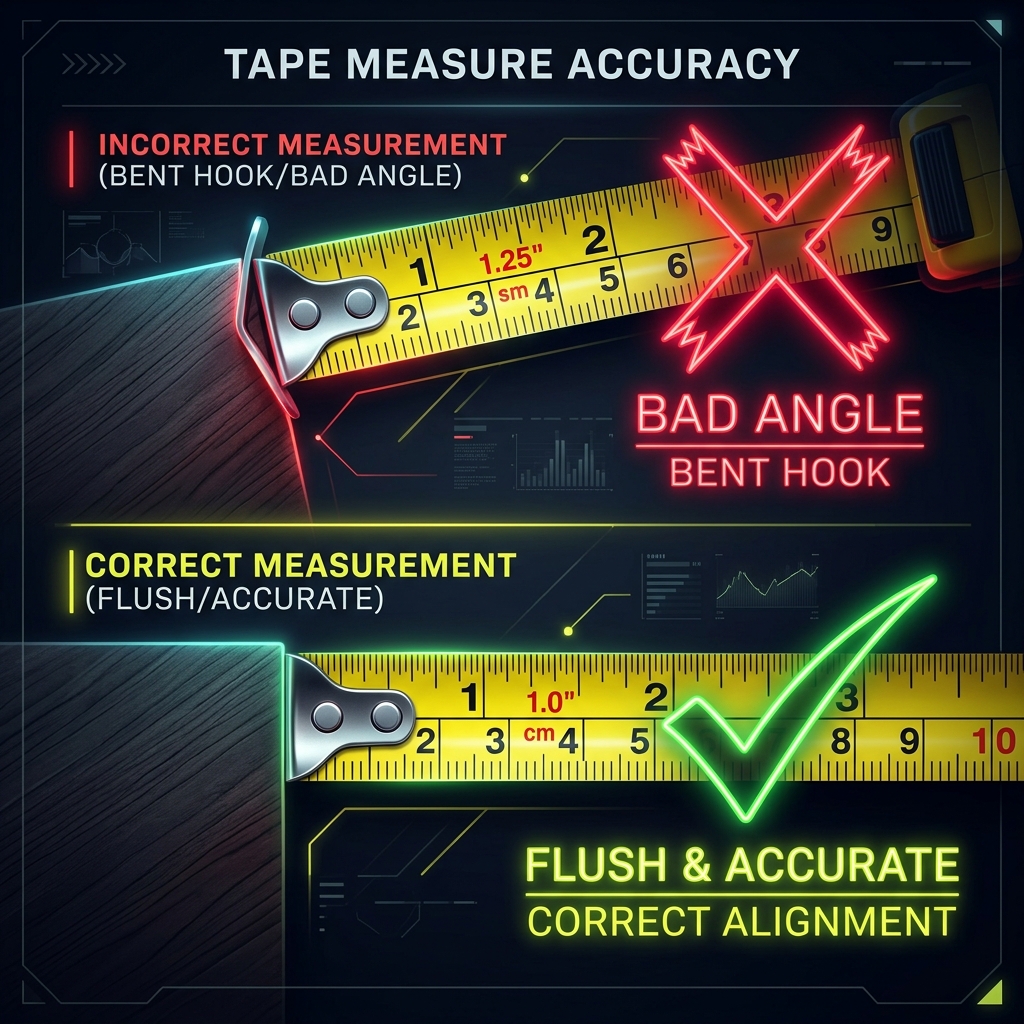
Have you ever noticed that the metal hook at the end of your tape measure wiggles? Many beginners think their tape measure is broken and try to hammer the rivets flat to tighten it. Do not do this!
That wiggle is intentional. The metal hook is exactly 1/16th of an inch thick. When you push the tape measure against a wall for an "inside measurement," the hook slides back by exactly its own thickness to give an accurate reading. When you hook it over the edge of a board and pull for an "outside measurement," it slides forward to compensate. If you tighten those rivets, your measurements will always be off by 1/16th of an inch.
2. The "Burn an Inch" Technique
While the sliding hook is clever, over time, the rivets can stretch, or the hook can get bent from being dropped. If you need absolute precision, professionals use a technique called "burning an inch."
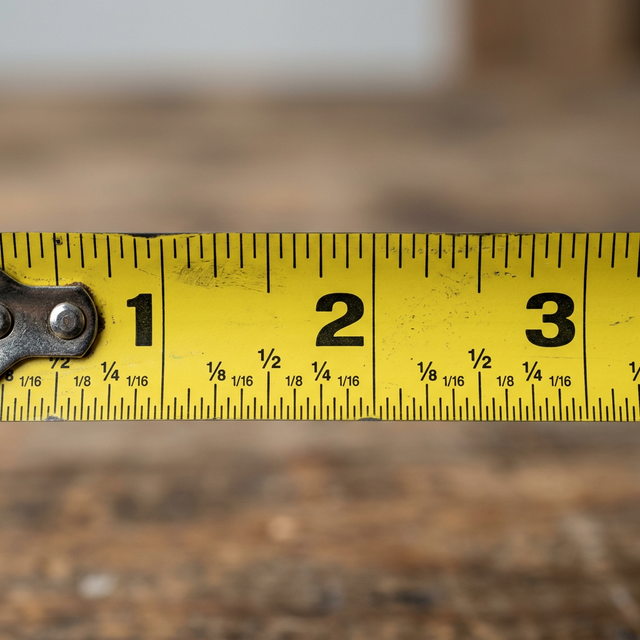
Instead of hooking the end of the tape over the edge of the material, you align the 1-inch mark exactly with the edge of the board. You then read your measurement and subtract exactly 1 inch from the final number.
Example: If you need a board cut to exactly 14 1/2 inches, you align the 1-inch mark on the edge, and make your pencil mark at 15 1/2 inches. This eliminates any error caused by the metal hook.
3. The Thickness of the Pencil Line
A standard carpenter's pencil can draw a line that is over 1/16th of an inch wide. If you make your mark, and then cut on the line, you have just altered your measurement.
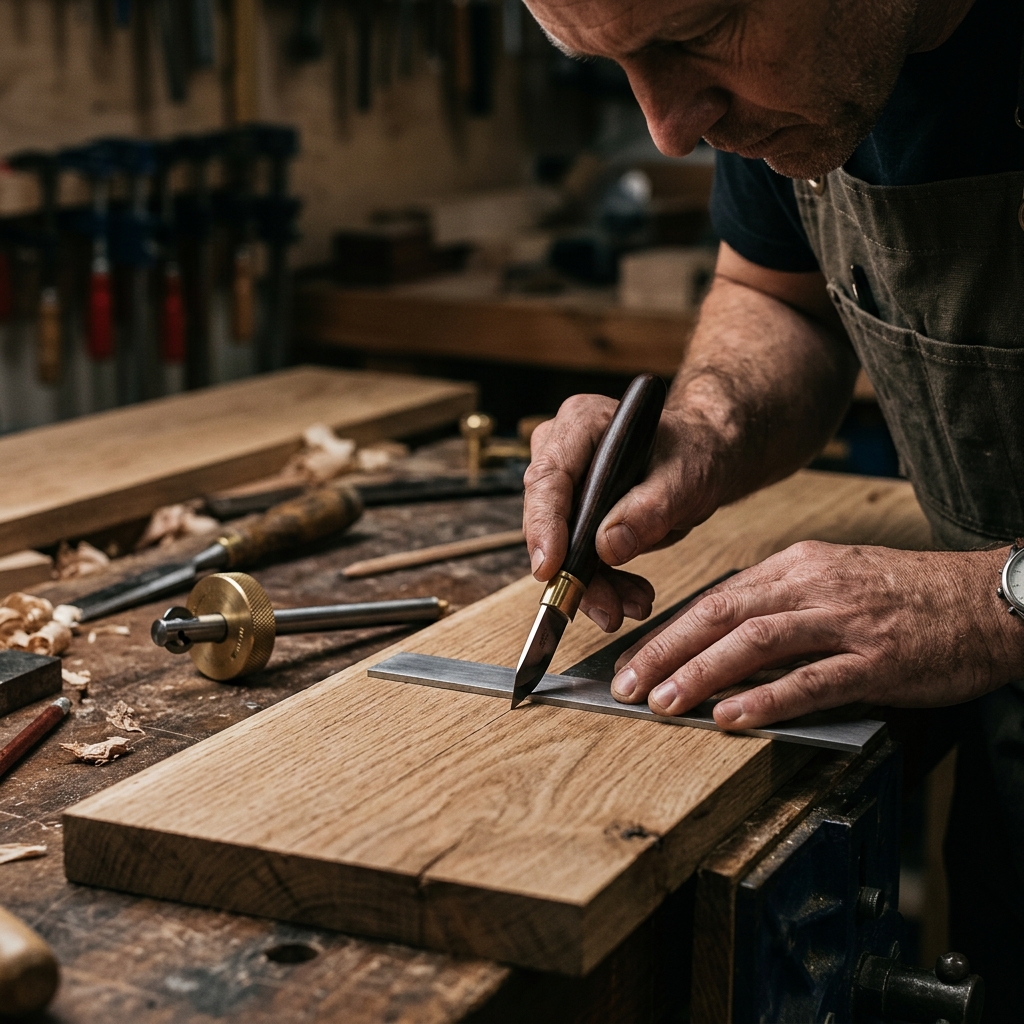
- Use a marking knife: For fine woodworking, don't use a pencil at all. Use a marking knife to score a microscopic line into the wood. Your saw blade or chisel will naturally find this groove.
- Use the "V" mark: Instead of drawing a straight dash (which can be hard to interpret), draw a 'V' shape pointing exactly to your measurement on the tape. The point of the 'V' is infinitely precise.
- Leave the line: When cutting with a saw, decide if the pencil line is part of the "keep" piece or the "waste" piece. Usually, you want to cut just to the edge of the line on the waste side, leaving the line visible on your final piece.
4. Don't Let the Tape Bend
When measuring a long span (like a wall), the tape measure will naturally sag in the middle. Because a straight line is the shortest distance between two points, a sagging tape measure will give you a measurement that is slightly too long.
For spans over 10 feet, either have a helper support the middle of the tape, pull it as taut as possible, or switch to a laser measure for perfect accuracy.
5. Reading the Tape Looking Straight Down
Parallax error occurs when you look at a measurement marking from an angle. The thickness of the tape measure blade can make the line appear slightly left or right of your mark if you aren't looking straight down from above. Always position your head directly above the mark you are reading or drawing.
Conclusion
Accuracy isn't just about reading the numbers right; it's about mastering your tools. Understand how your tape measure's hook works, use the "burn an inch" method for precision, be mindful of your pencil lines, and always look at your marks head-on.