The Ultimate Guide to Tape Measure Fractions
Published: March 12, 2026
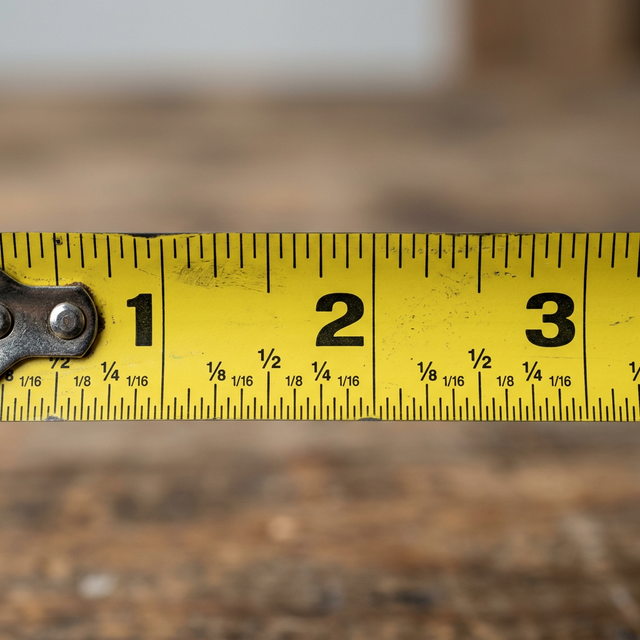
If you've ever looked at a tape measure and felt like you were staring at a code, you're not alone. Most standard Imperial tape measures are packed with lines of varying heights, each representing a specific fraction of an inch.
Why Line Height Matters
The secret to reading a tape measure quickly is training your eyes to recognize line height. You don't actually need to count every tiny mark from zero. Instead, look at how tall the line is:
- The Giants (Numbered): These are full inches. There's no math here, just the big numbers (1, 2, 3, etc.). They extend all the way across the width of the tape blade on most models.
- The Half-Inch Mark (1/2"): Exactly halfway between two whole inches is the 1/2" mark. It is the second tallest line on the tape.
- The Quarter-Inch Marks (1/4" and 3/4"): These sit halfway between an inch mark and the half-inch mark. They are the third tallest lines. There are four quarter-inch segments in every inch.
- The Eighth-Inch Marks (1/8", 3/8", 5/8", 7/8"): Shorter still, these divide the inch into 8 equal segments.
- The Sixteenth-Inch Marks (1/16", 3/16", 5/16", etc.): The shortest lines. These are the finest increments on standard tapes, dividing the inch into 16 tiny segments.
The Math Behind the Ticks: Reducing Fractions
All measurements on an Imperial tape measure are based on fractions with denominators that are powers of two: 2, 4, 8, and 16. When you count tick marks, you are counting sixteenths, eighths, quarters, or halves. The key rule of thumb is to always reduce your fraction to its lowest terms:
- Counting 2 sixteenths (2/16") is actually 1/8".
- Counting 4 sixteenths (4/16") reduces to 1/4".
- Counting 6 sixteenths (6/16") reduces to 3/8".
- Counting 8 sixteenths (8/16") reduces to 1/2".
- Counting 10 sixteenths (10/16") reduces to 5/8".
- Counting 12 sixteenths (12/16") reduces to 3/4".
- Counting 14 sixteenths (14/16") reduces to 7/8".
Step-by-Step: How to Read a Measurement
Follow this simple 3-step process to read any measurement on a tape blade:
- Find the Last Whole Inch: Look at the last big number before your measurement point. Write that down (e.g., "5").
- Identify the Fractional Tick Mark: Locate the line where your measurement ends. Identify its height.
- Is it the second tallest line? That is a half-inch (1/2").
- Is it a medium-tall line? It's a quarter (1/4" or 3/4").
- Is it a medium-short line? It's an eighth (1/8", 3/8", 5/8", or 7/8").
- Is it one of the tiny lines? It's a sixteenth (1/16", 3/16", 5/16", 7/16", 9/16", 11/16", 13/16", or 15/16").
- Combine the Two: Put your whole inch and fraction together (e.g., 5 + 3/8" = 5 3/8").
Example Walkthrough: Reading 3 5/8" vs 3 11/16"
Let's say your board ends just past the 3-inch mark. If it ends exactly on the medium-short line past the 3/16" mark, that line is 5 eighth-inch ticks past 3. You write down 3 5/8". However, if the board ends on the tiny sixteenth-inch tick right next to it, you must count the sixteenths. The line is 11 ticks past the 3. You write down 3 11/16". Note that 11/16" is just 1/16" larger than 5/8" (which is 10/16").
Top Tip: The "Halfway Rule"
If you find a line and aren't sure what it is, find the closest "famous" line (like a whole inch or a half-inch) and move from there. For example, if you are just one tiny click past the 1/2" mark, you are at 9/16". If you are halfway between 1/2" and 3/4", you are at 5/8". This prevents you from having to count all the way from the beginning of the inch every single time.
Special Markings: Red Studs and Black Diamonds
Have you noticed the special red numbers and tiny black diamonds on your tape blade? These are professional layout aids for builders:
- Red Numbers (Every 16 inches): Standard wall studs are spaced 16 inches apart from center to center. The red highlights (16, 32, 48, 64, 80...) allow carpenters to quickly mark stud locations without doing mental math.
- Black Diamonds (Every 19.2 inches): These small diamonds or triangles (at 19.2, 38.4, 57.6, 76.8...) are for engineered joist spacing. Standard 8-foot sheet goods (like plywood or drywall) fit perfectly over five joists spaced at 19.2 inches, saving framing material while maintaining structural integrity.
Using an interactive tool like our TapeVisualizer helps build this "muscle memory" by showing you the visual feedback immediately as you scroll.
Self-Test: Practice Reading Tape Fractions
Test your knowledge with these standard scenario questions:
Q1: You are measuring a window trim and the blade lands 2 tick marks past the 24-inch mark. What is the measurement?
Answer: Since the smallest ticks represent 1/16", 2 ticks is 2/16". Reduced to lowest terms, 2/16 = 1/8. The correct measurement is 24 1/8".
Q2: Your measurement lands exactly on the tick mark between 3/4" and 7/8". What fraction is this?
Answer: The tick mark directly between 3/4" (which is 6/8" or 12/16") and 7/8" (which is 14/16") is the sixteenth-inch mark: 13/16". The measurement is 13/16".
Q3: Why does the end metal hook on your tape slide back and forth?
Answer: It is designed to slide exactly the thickness of the hook itself. When pulling the tape, the hook pulls out to measure from the inside face of the hook. When pushing against a wall, the hook slides in so you measure from the outside face. This ensures "true zero" accuracy for both inside and outside measurements.

Related Measurement Guides
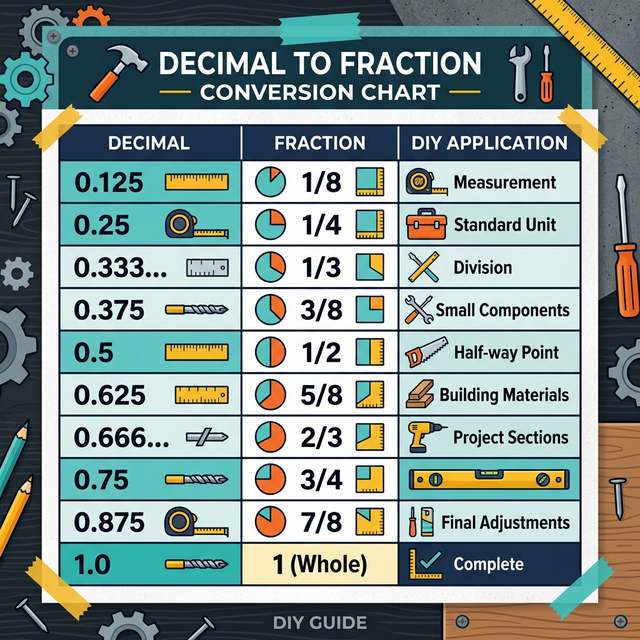
Decimal to Fraction Chart
Convert calculator decimals into standard tape fractions instantly.
Educational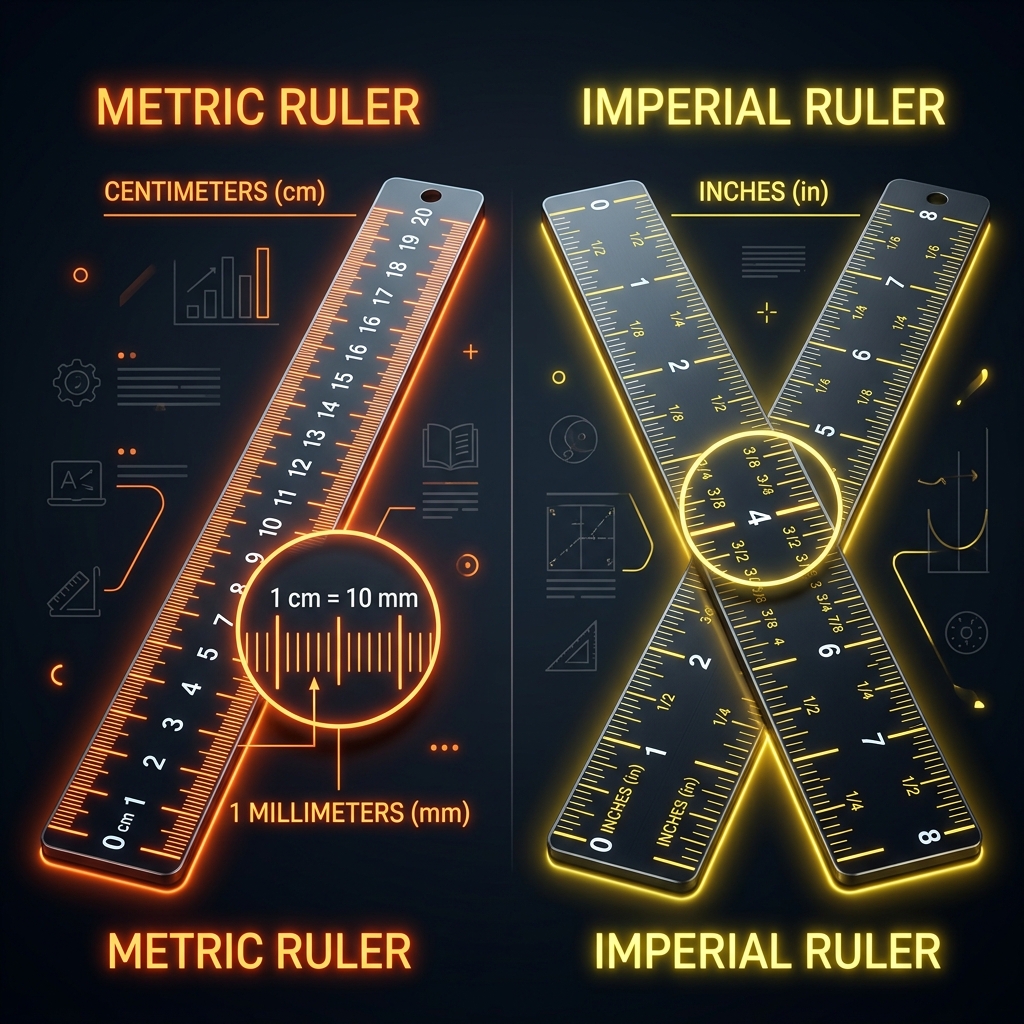
How to Read a Ruler
Learn the differences between metric and imperial ruler tick marks.
Practical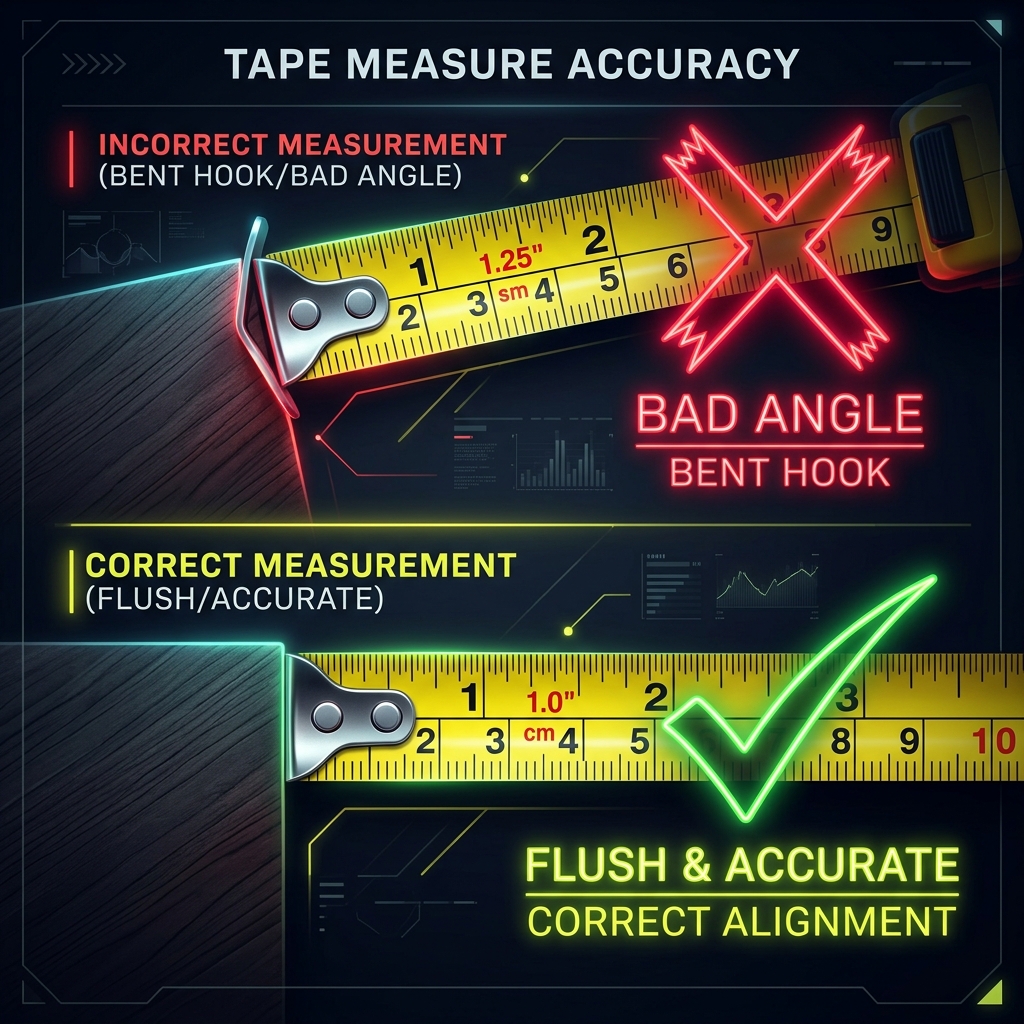
5 Measuring Mistakes to Avoid
Stop wasting lumber with these top measuring accuracy tips.