How to Read a Ruler: Metric vs. Imperial Systems
Published: May 24, 2026
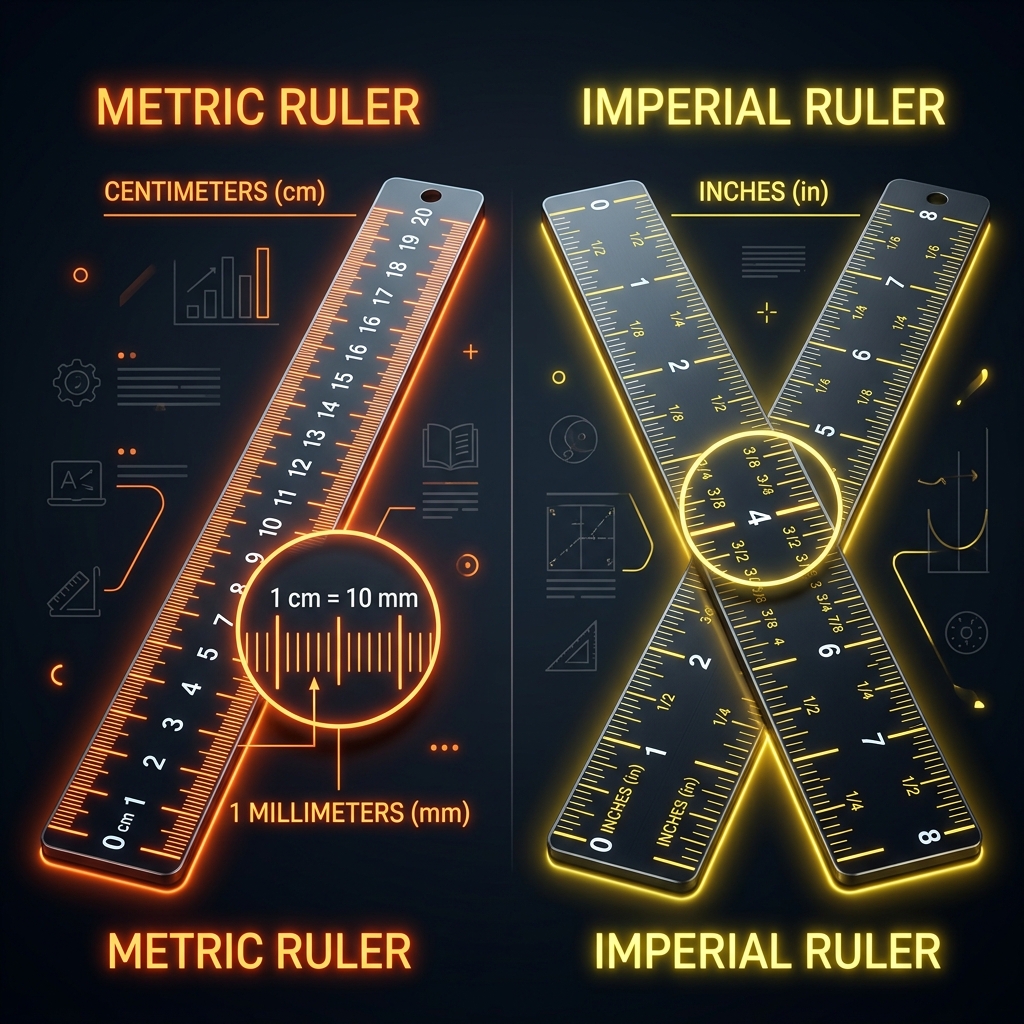
At first glance, a ruler looks like a simple stick with numbers on it. However, if you look closely, you'll see a grid of lines that can be incredibly confusing if you don't know which system you are using. Rulers typically display two systems of measurement: the Imperial System (used primarily in the United States) and the Metric System (used almost everywhere else in the world).
Understanding how to read both sides of a ruler is a fundamental skill for DIY projects, sewing, crafting, schoolwork, and construction.
1. The Imperial Side (Inches)
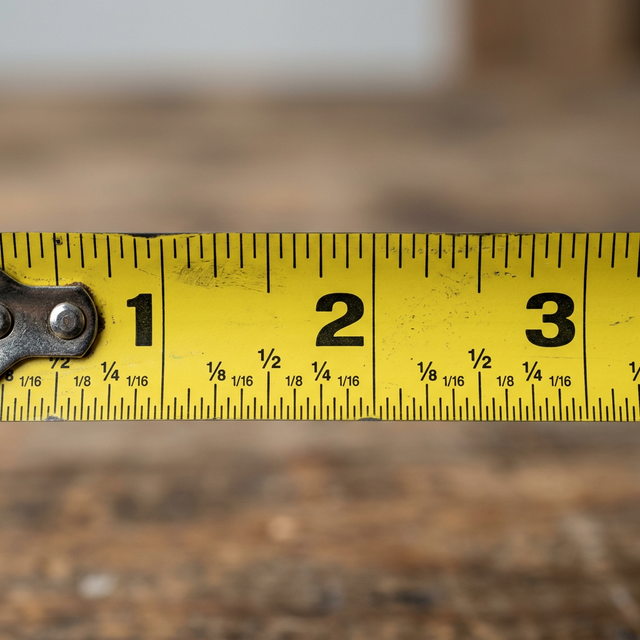
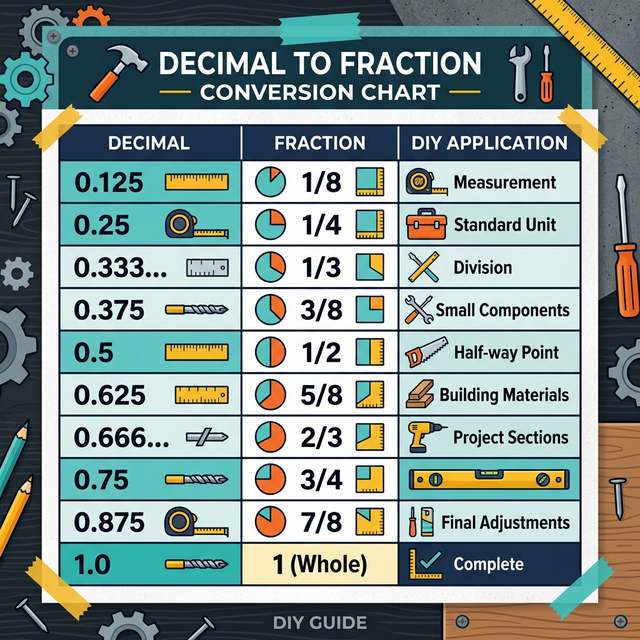
The Imperial side of a ruler is divided into 12 major segments called inches (which make up one foot). Each inch is further divided into fractions. Unlike the metric side, there are no decimals here. Instead, you'll see tick marks of varying heights representing halves, quarters, eighths, and sixteenths of an inch.
Common Increments:
- 1/2" - The longest line in the center of the inch.
- 1/4" - The next longest lines, dividing the inch into 4 parts.
- 1/8" - Shorter lines dividing the inch into 8 parts.
- 1/16" - The shortest lines dividing the inch into 16 parts.
2. The Metric Side (Centimeters/Millimeters)
The Metric side of a ruler is based on tens, making it much easier to read mathematically. The major numbered lines represent centimeters (cm). Between each centimeter are 10 small divisions representing millimeters (mm). There are exactly 10 millimeters in every centimeter, and 1,000 millimeters in a meter.
Common Increments:
- 1 cm - Numbered lines (1, 2, 3...).
- 0.5 cm (5 mm) - The medium line exactly in the middle of two centimeter marks.
- 0.1 cm (1 mm) - The tiny individual ticks.
Step-by-Step: How to Read the Metric Side
Reading a metric ruler is straightforward since you can write your measurement as a decimal. Follow these steps:
- Find the Nearest Centimeter: Look at the last number before your item ends. That is your whole centimeter value (e.g., "7").
- Count the Millimeters: Count the tiny ticks past that number. If the item ends 4 ticks past the 7, you have 4 millimeters.
- Write the Measurement: You can write this as 7.4 cm (7 centimeters plus 4 tenths of a centimeter) or simply 74 mm (since 7 cm = 70 mm, plus 4 mm).
Step-by-Step: How to Read the Imperial Side
Reading the Imperial side requires identifying fractional lines by their height:
- Find the Whole Inch: Find the last big number before your measurement point (e.g., "3").
- Identify the Tick: Match the line height to determine the denominator (e.g., 2 for half, 4 for quarter, 8 for eighth, 16 for sixteenth).
- Count from the Inch Mark: Count the ticks of that height (or larger) from the whole number. If you have 5 eighth-inch ticks, your fraction is 5/8".
- Combine: Write down your final measurement as 3 5/8".
Conversion Guide: Metric to Imperial
If you need to convert between the two systems on your project, here are the three golden ratios to memorize:
- 1 Inch = 2.54 Centimeters (or 25.4 Millimeters)
To convert inches to cm, multiply by 2.54. (e.g., 5 inches x 2.54 = 12.7 cm). - 1 Centimeter = 0.3937 Inches
To convert centimeters to inches, multiply by 0.3937. (e.g., 10 cm x 0.3937 = 3.93 inches). - 1 Foot = 30.48 Centimeters
To convert feet to cm, multiply by 30.48.
If you're ever struggling with fractional inches, type your measurement (like "5 5/16") into our TapeVisualizer search tool on the homepage to see exactly what that line looks like on the tape blade instantly!