Decimal to Fraction Conversion Chart
Published: March 12, 2026
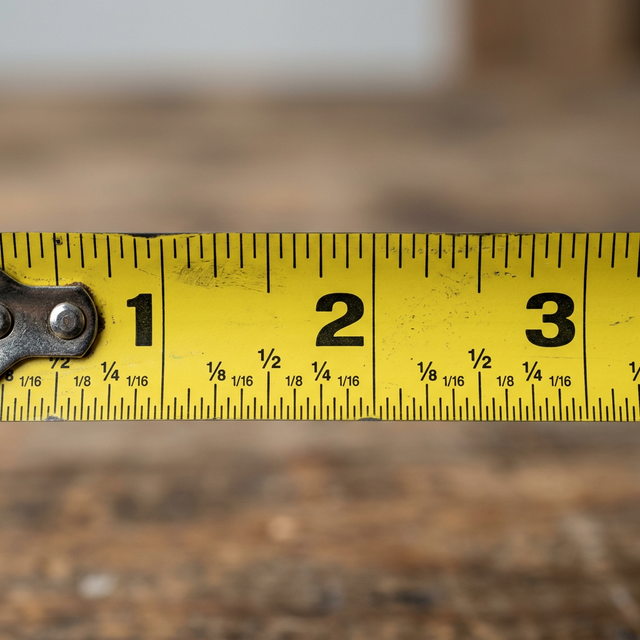
Ever used a calculator and got "0.625" when you needed to mark a board? This chart is your best friend for DIY projects.
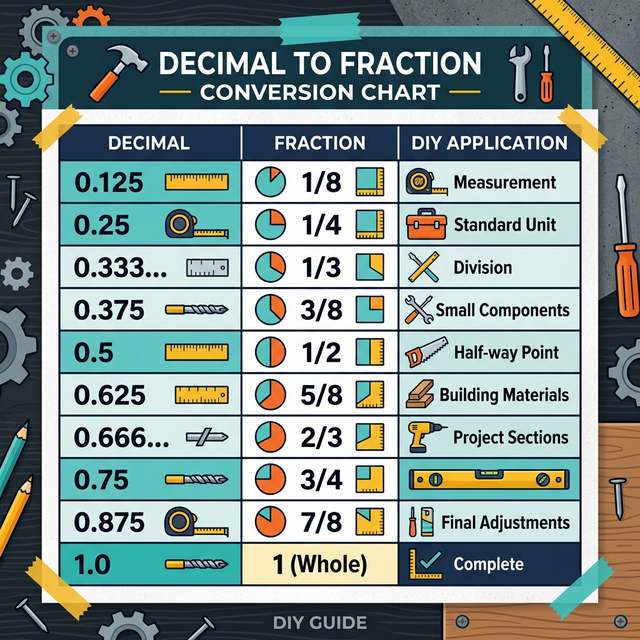
| Fraction | Decimal |
|---|---|
| 1/16" | 0.0625 |
| 1/8" | 0.125 |
| 3/16" | 0.1875 |
| 1/4" | 0.250 |
| 5/16" | 0.3125 |
| 3/8" | 0.375 |
| 7/16" | 0.4375 |
| 1/2" | 0.500 |
| 9/16" | 0.5625 |
| 5/8" | 0.625 |
| 11/16" | 0.6875 |
| 3/4" | 0.750 |
| 13/16" | 0.8125 |
| 7/8" | 0.875 |
| 15/16" | 0.9375 |
| 1" | 1.000 |
Why Convert Decimals to Fractions?
Construction, design, and woodworking plans are almost exclusively drawn up using fractional inches (like 5 3/8" or 12 7/16"). However, digital calipers, smartphone calculators, and 3D modeling software (like CAD or SketchUp) naturally output numbers as decimals (like 5.375 or 12.4375).
If you don't know how to convert that decimal back into a fraction, you'll end up guessing and making inaccurate cuts. Knowing that 0.375 is exactly 3/8" or that 0.625 is exactly 5/8" ensures that your digital designs translate perfectly to your physical materials.
The Math: How to Convert Any Decimal to a Tape Measure Fraction
If you don't have this chart handy, you can convert any decimal to the nearest 1/16th of an inch using a simple formula on your calculator:
Step-by-Step Formula:
- Take the decimal portion of your number (e.g., if you have 8.43, take the 0.43).
- Multiply that decimal by 16 (since most standard tape measures measure in 16ths):
0.43 x 16 = 6.88 - Round the result to the nearest whole number: 7.
- Put that number over 16: 7/16".
- Combine it with the whole number: 8 7/16".
Real-World Tolerance & Rounding
In the real world, calculators will output values like 0.583 inches. Because 0.583 is not an exact match on a standard tape measure, you have to round to the nearest tick mark. Using our formula:
0.583 x 16 = 9.328 → rounds to 9 → 9/16"
If you need extreme precision (like in fine cabinet making), you can multiply by 32 instead of 16 to find the measurement to the nearest 1/32nd of an inch:
0.583 x 32 = 18.656 → rounds to 19 → 19/32"
Converting Metric (Millimeters) to Fractional Inches
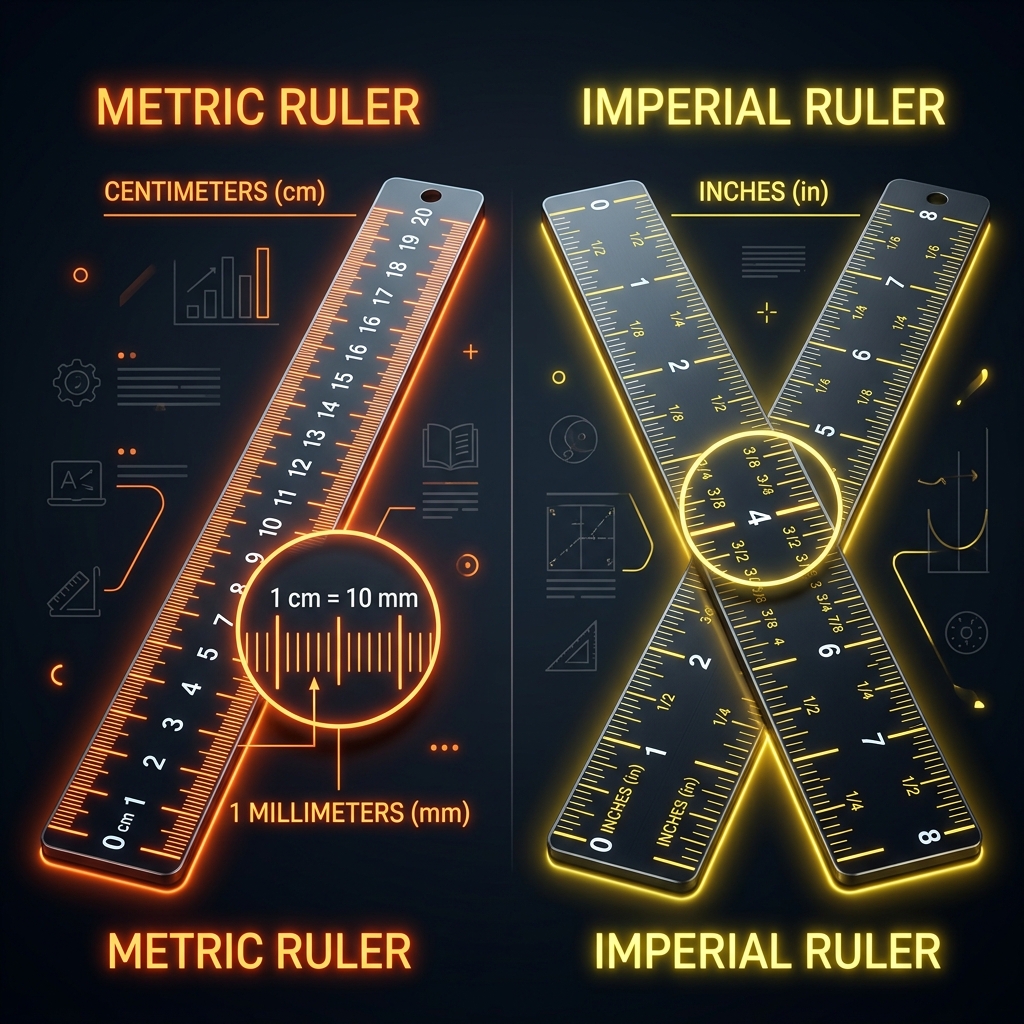
If you are working with international plans that use metric units, you can easily convert millimeters to fractional inches using this math:
- Divide the millimeters by 25.4 (since there are exactly 25.4 mm in an inch):
Example: 120 mm →120 / 25.4 = 4.7244 inches. - Take the decimal portion (0.7244) and multiply by 16:
0.7244 x 16 = 11.59→ rounds to 12. - Write the fraction: 12/16", which reduces to 3/4".
- The final measurement is 4 3/4".
Use our TapeVisualizer search tool at the top of the homepage to type in any decimal (like "4.72") and instantly see which tick mark it snaps to on the virtual tape blade!